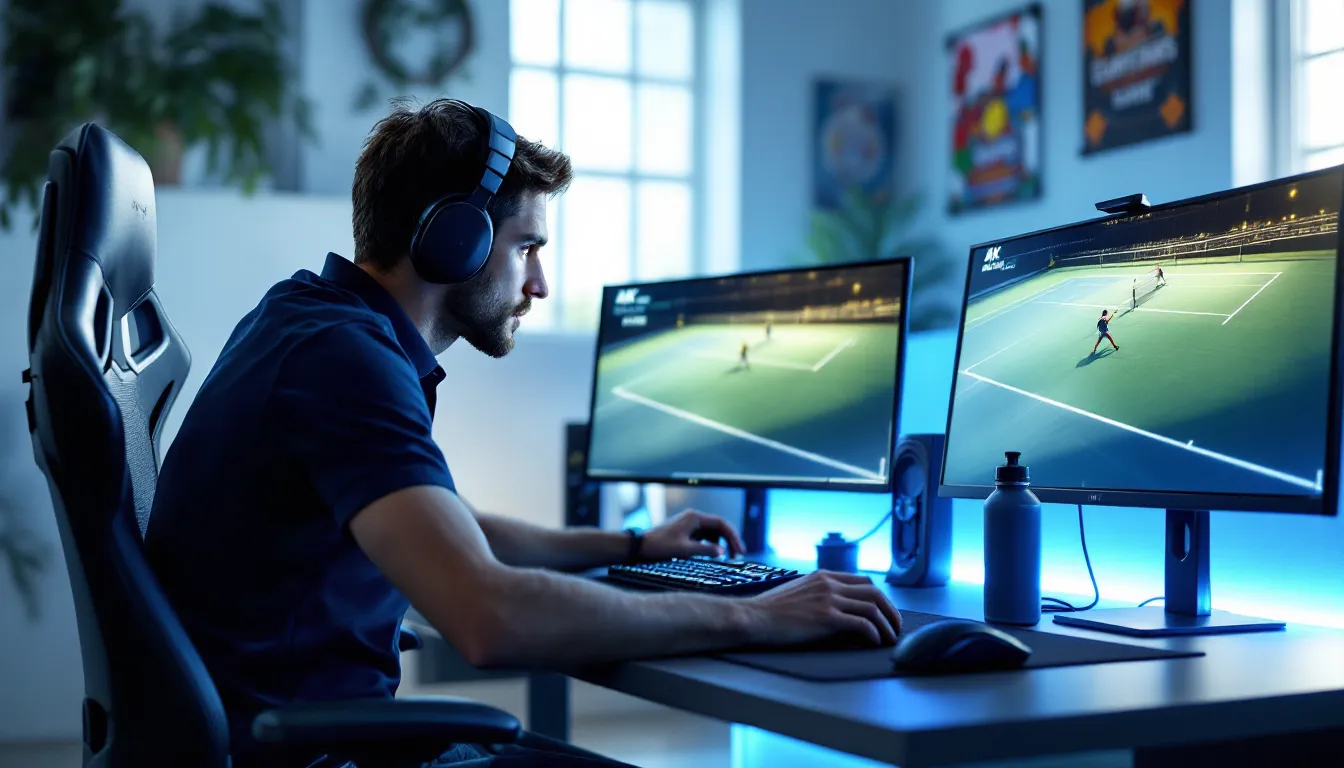

Tennis video games have carved out a dedicated niche in the sports gaming landscape, offering everything from ultra-realistic Grand Slam simulations to lightning-fast arcade rallies. Whether you’re chasing the perfect topspin winner or building a career from the qualifying rounds to Wimbledon glory, today’s tennis titles deliver deeper mechanics and sharper presentation than ever before.
In 2026, the genre sits at an interesting crossroads. Simulation franchises continue refining ball physics and player animations, while arcade-style games remind us that sometimes you just want to smash a winner without worrying about stamina meters. With cross-platform play becoming standard and mobile entries gaining serious traction, there’s a tennis game for every type of player, and every device.
This guide breaks down the current state of tennis gaming, from the top titles and core mechanics to career modes, online play, and platform differences. Let’s jump in.
Table of Contents
ToggleKey Takeaways
- Tennis video games in 2026 offer diverse options ranging from photorealistic simulations like TopSpin 2K26 to fast-paced arcade titles, ensuring there’s a game for every player type and device.
- TopSpin 2K26 delivers the deepest career mode in the genre with sponsorships, training camps, and dynamic rivalries that mirror real professional tennis progression.
- Simulation games require mastery of timing windows and shot selection, while arcade tennis games prioritize accessibility and speed over complex mechanics and stamina management.
- Cross-platform play is now standard across major tennis titles, with PC and current-gen consoles offering the most competitive experiences, though mobile games provide the widest accessibility.
- The competitive esports scene for tennis video games is growing, with TopSpin 2K26 hosting a $50,000 championship tournament and demonstrating viable mainstream potential for the genre.
The Evolution of Tennis Video Games
Tennis games have been around since the Atari era, but the gap between Pong and today’s photorealistic simulations is staggering. Early titles like Tennis for Two and Pong laid the groundwork for digital sports, but they were abstractions, simple paddles and bouncing dots.
By the ’90s, franchises like Virtua Tennis and Top Spin introduced 3D courts, motion-captured animations, and licensed players. These games balanced approachability with depth, letting casual players enjoy a quick match while competitive gamers mastered timing windows and shot placement. Virtua Tennis 3 (2006) and Top Spin 4 (2011) are still regarded as genre peaks for their tight controls and satisfying rally flow.
The 2010s saw a dry spell. Major publishers stepped back, leaving the genre in the hands of smaller studios. Titles like AO Tennis and Tennis World Tour filled the gap but often launched with bugs and limited content. The void left by Top Spin and Virtua Tennis was impossible to ignore.
From Arcade Classics to Photorealistic Simulations
Fast-forward to 2026, and the landscape has shifted again. Advances in motion capture, real-time lighting, and AI-driven animations have pushed simulation titles toward near-photorealism. Games now replicate the subtle spin behavior of a clay court versus grass, the fatigue effects on serve speed, and even crowd noise that reacts to momentum swings.
At the same time, indie developers and smaller studios have revived the arcade spirit. Titles with exaggerated physics, power-ups, and stylized visuals prove there’s room for both schools of thought. The evolution isn’t linear, it’s branching, and that’s made 2026 one of the most varied years for tennis gaming in over a decade.
Best Tennis Video Games in 2026
The 2026 lineup offers something for everyone, whether you’re chasing realism or just want fast, fun rallies. Here’s the current breakdown.
Top Simulation Tennis Games
TopSpin 2K26 (PC, PS5, Xbox Series X
|
S)
The long-awaited return of the Top Spin franchise under 2K’s banner delivers. TopSpin 2K26 features overhauled ball physics, a deep career mode with sponsorship mechanics, and 60+ licensed ATP and WTA players. The timing-based shot system rewards precision, and the stamina model forces strategic pacing across five-set matches. Patch 1.3 (February 2026) fixed server stability issues and rebalanced slice effectiveness on grass courts.
AO Tennis 3 (PC, PS5, Xbox Series X
|
S, Switch)
Big Ant Studios’ third entry improves on its predecessors with smoother animations and a robust community creation suite. Players can design custom tournaments, share player likenesses, and tweak court surfaces. The physics lean realistic, though some players find the serve timing window too strict. Cross-platform play was added in the Day One patch, making online matchmaking significantly faster.
Tennis Legends 2026 (PC, PS5, Xbox Series X
|
S)
A newcomer from a European indie studio, Tennis Legends 2026 leans into historical content. Play as legends like Björn Borg, Steffi Graf, and Pete Sampras across era-accurate courts and equipment. The simulation model is less granular than TopSpin 2K26, but the nostalgia factor and unique roster make it a standout for tennis history buffs.
Best Arcade-Style Tennis Games
Super Sports Smash: Tennis Edition (Switch, PC)
Think Mario Tennis meets modern indie aesthetics. Super Sports Smash ditches realism for power-ups, trick shots, and courts with environmental hazards. Four-player local co-op makes it a solid party game, and the single-player challenge mode offers surprising depth. No licensed players, but the character roster is charming and varied.
Hyper Rally Tennis (PC, PS5, Xbox Series X
|
S)
Neon visuals, thumping electronic soundtrack, and rallies that feel like bullet-hell dodging. Hyper Rally Tennis strips tennis down to reaction time and shot angles, with a turbo meter that lets you pull off near-impossible returns. It’s not for purists, but it’s addictive and runs at a locked 120fps on current-gen consoles.
Mobile Tennis Games Worth Playing
Tennis Clash (iOS, Android)
The mobile king. Tennis Clash uses simplified swipe controls and matchmaking built around short, 3-minute matches. The card-based progression system (upgrading gear and stats) leans into free-to-play tropes, but skill still matters. Recent updates have added more diverse content and balance tweaks to reduce pay-to-win concerns.
Ultimate Tennis (iOS, Android)
A more simulation-focused mobile option. Ultimate Tennis features realistic player motion, career mode progression, and PvP tournaments. Monetization is less aggressive than Tennis Clash, though the stamina system can gate playtime for free users.
Gameplay Mechanics: Simulation vs. Arcade
The core divide in tennis gaming comes down to how much realism you want. Simulation and arcade titles offer fundamentally different experiences.
Realistic Tennis Physics and Controls
Simulation games prioritize shot variety, court positioning, and stamina management. In TopSpin 2K26, for example, shot input involves:
- Timing windows: Hit the ball during the optimal frame for maximum power and accuracy. Early or late timing results in weaker shots or unforced errors.
- Shot types: Topspin, slice, flat, lob, and drop shot, each with distinct trajectories and bounce behavior.
- Player stats: Serve speed, forehand power, backhand consistency, and movement all vary by player and affect your strategic options.
- Surface interaction: Clay slows the ball and increases bounce height: grass speeds up play and keeps bounces low: hard courts sit in the middle.
Stamina drains over long rallies and multi-set matches. Push too hard early, and you’ll face slower movement and reduced shot power in the fifth set. It’s a game of pacing, not just reflexes.
Controls typically map shot types to face buttons (A/X for topspin, B/Circle for slice, etc.), with the left stick directing placement and the right stick (on some titles) offering advanced shot shaping. Learning the timing feels like mastering a fighting game’s combo system, muscle memory is everything.
Arcade Tennis: Fast-Paced and Accessible
Arcade games strip out complexity in favor of speed and spectacle. Hyper Rally Tennis and Super Sports Smash reduce shot selection to a few inputs and emphasize positioning and reaction time over nuanced mechanics.
Key differences:
- Simplified controls: One button for standard shots, one for power shots, maybe a special meter for trick moves.
- Faster rallies: Ball speed is cranked up, and matches rarely go beyond a few minutes.
- Power-ups and abilities: Environmental hazards, temporary speed boosts, or shots that curve mid-air add chaos and unpredictability.
- Forgiving physics: You won’t lose because you hit the ball 2 frames too late. Arcade games prioritize fun over frustration.
The trade-off is depth. Arcade titles have lower skill ceilings, which makes them great for pick-up-and-play sessions but less rewarding for long-term mastery. If you want a tennis game that feels like a sport, go simulation. If you want a tennis game that feels like a party, go arcade.
Career Modes and Single-Player Experiences
Career modes are where tennis games either hook you for dozens of hours or fall flat. The best ones blend progression, narrative beats, and meaningful choices.
Building Your Tennis Legend
TopSpin 2K26 features the deepest career mode in the genre right now. You create a custom player, assign attribute points, and start in the qualifying circuit. Early matches are against no-name opponents in small venues, but as you climb the rankings, you unlock:
- Sponsorships: Gear brands offer contracts with performance bonuses. Meet targets (e.g., win 3 matches in a tournament, hit 20 aces) to earn cash and unlock signature equipment.
- Training camps: Spend downtime improving specific stats, serve power, backhand accuracy, court speed, etc. Overtraining risks injury, forcing rest weeks.
- Rivalries: Dynamic storylines emerge based on your match history. Beat the same opponent in multiple finals, and post-match cutscenes will reference the ongoing feud.
- Grand Slam runs: Winning a major feels monumental because of the multi-match gauntlet and escalating difficulty.
The progression loop mirrors real tennis careers. You’ll grind through lower-tier tournaments, manage fatigue across a packed schedule, and decide whether to skip events to peak for majors.
AO Tennis 3 offers a similar structure but with more customization. You can tweak tournament calendars, adjust difficulty sliders per opponent, and even create fictional leagues. The trade-off is less narrative polish, there are no cutscenes or voice acting, just menus and match results.
Tournament Modes and Grand Slam Challenges
If career mode feels like too much commitment, tournament modes let you jump straight into the big events. TopSpin 2K26 and AO Tennis 3 both include full Grand Slam tournaments (Australian Open, French Open, Wimbledon, US Open) with authentic courts, crowd chants, and trophy presentations.
Tennis Legends 2026 adds historical Grand Slam challenges, recreate Borg vs. McEnroe at Wimbledon 1980 or Graf’s Golden Slam run. These scenarios come with specific win conditions (e.g., win in straight sets, hit a certain number of aces) and feel like puzzle matches rather than straight simulations.
Tournament modes are perfect for short bursts. You get the high-stakes feel of a major without the calendar management and injury risks of career mode.
Online Multiplayer and Competitive Play
Online multiplayer separates the casual players from the grinders. In 2026, most tennis games offer ranked matchmaking, but the quality and player base vary wildly.
TopSpin 2K26 has the most active competitive scene. Ranked matches use an Elo-style rating system, and seasons run quarterly with exclusive rewards (custom rackets, outfits, emotes). Patch 1.3 introduced improved server tick rates, reducing input lag in cross-platform matches between PC and consoles. The meta currently favors serve-and-volley play on grass courts, though baseline grinders still dominate on clay.
AO Tennis 3 supports cross-platform play but has a smaller player base. Matchmaking can take 2-3 minutes during off-peak hours, and skill gaps are noticeable, you’ll occasionally get stomped by a top-100 player in a casual match. The community leagues feature is excellent, though: players can organize custom tournaments with specific rules (e.g., no slices, best-of-five only) and invite friends.
Ranked Matches and Esports Integration
Tennis games haven’t cracked the esports mainstream like FIFA or NBA 2K, but there are signs of growth. TopSpin 2K26 hosted its first official championship in January 2026, with a $50,000 prize pool and streaming coverage that drew respectable viewership.
The skill ceiling in simulation tennis is high enough to support competitive play. Top players exploit frame-perfect timing, court positioning, and opponent tendencies. Watching high-level matches reveals depth that’s invisible in casual play, subtle shot placements, stamina manipulation, and psychological pressure that mirrors real tennis.
Arcade titles like Hyper Rally Tennis lean into party-game chaos, which doesn’t translate to traditional esports. But the speed and spectacle make them popular for exhibition events and Twitch variety streams.
Customization and Player Creation
Player creation suites have become a genre staple, and the depth varies significantly.
TopSpin 2K26 uses a robust face-scanning app (via smartphone) and an attribute system that lets you build specialized players. Want a serve-focused baseliner? Dump points into serve power and stamina, then tweak playstyle sliders to favor aggressive positioning. The cosmetic options are extensive, dozens of licensed apparel brands, custom racket designs, and even celebration animations.
AO Tennis 3 goes further with community tools. The in-game editor lets you create custom players from scratch, design tournament logos, and share everything via a Steam Workshop-style hub. The player likeness sharing community is active, with near-perfect recreations of current ATP and WTA players who aren’t officially licensed.
Tennis Legends 2026 limits customization to historical players, but you can tweak their stats and equipment to reflect different eras. Playing as a young Andre Agassi with modern racket tech is a fun what-if scenario.
Mobile games like Tennis Clash use card-based progression instead of traditional creation. You unlock characters with preset stats, then upgrade them via duplicates and currency. It’s less personal but fits the F2P model.
Customization depth matters if you’re invested in career mode or online play. Creating a player that feels uniquely yours, whether through appearance, playstyle, or progression choices, adds hours of engagement.
Essential Tips for Mastering Tennis Video Games
Whether you’re playing simulation or arcade, certain fundamentals apply. Here’s how to level up your game.
Timing and Shot Selection
Timing is everything in simulation tennis. Most games show a brief visual cue (a shrinking circle, a color flash, or a controller vibration) when the ball enters the optimal hit window. Practicing this in training mode until it’s muscle memory is non-negotiable.
Shot selection depends on court position and opponent placement:
- Baseline rallies: Use topspin to keep the ball deep and push your opponent back. Mix in occasional slices to disrupt rhythm.
- Approach shots: Hit a deep slice or flat shot, then move to the net for a volley finish.
- Defensive situations: Lobs buy time and reset positioning. Don’t overuse them, good players will punish predictable lobs with overhead smashes.
- Break points: Go for high-percentage shots. Unforced errors lose more matches than lack of winners.
In arcade games, shot selection is simpler but still matters. Learn which moves counter others (e.g., power shots beat standard returns but lose to perfectly timed counters) and adapt.
Court Positioning and Movement Strategies
Court positioning wins matches. After every shot, return to the center of the baseline unless you’re rushing the net. This minimizes the angles your opponent can exploit.
Key movement tips:
- Anticipate: Watch your opponent’s swing animation. You can often predict shot direction before the ball leaves their racket.
- Don’t overcommit: Sliding too far to one side leaves the opposite corner wide open. Small adjustments beat big lunges.
- Use sprint sparingly: In simulation games, sprinting drains stamina faster. Save it for critical moments.
- Net play: If you volley, commit. Half-hearted net approaches get you lobbed or passed.
Practice against higher-difficulty AI to sharpen positioning. The AI punishes lazy movement by exploiting open court space, which trains better habits than stomping easy opponents.
Platform Comparison: PC, Console, and Mobile
Platform choice affects performance, player base, and control options. Here’s the breakdown.
PC (Steam, Epic Games Store)
PC versions of TopSpin 2K26 and AO Tennis 3 support higher frame rates (up to 144fps), ultrawide resolutions, and mod support. The AO Tennis 3 modding community has added custom tournaments, retro player skins, and even tweaked physics. Mouse and keyboard aren’t viable for tennis games, you’ll want a controller, but the flexibility and visual fidelity are top-tier.
**PlayStation 5 / Xbox Series X
|
S**
Current-gen consoles deliver locked 60fps (or 120fps in performance modes) with fast loading via SSD. DualSense haptic feedback in TopSpin 2K26 adds subtle cues for ball impact and court surface changes, which some players find helpful. Cross-platform play between PS5 and Xbox is standard now, so matchmaking is fast.
The Xbox Game Pass catalog includes AO Tennis 3, making it a no-brainer if you’re already subscribed.
Nintendo Switch
Switch versions lag behind in visuals and frame rate (typically 30fps, with occasional dips in handheld mode). AO Tennis 3 runs decently but lacks the visual polish of other platforms. The portability factor is the main draw, grinding career mode matches during a commute works well.
Online play on Switch is functional but has a smaller player base, leading to longer matchmaking times.
Mobile (iOS, Android)
Mobile tennis games like Tennis Clash and Ultimate Tennis prioritize accessibility. Touch controls are responsive, and matches are short enough for quick sessions. Competitive depth is limited compared to console/PC, but the platform reach makes mobile titles the most-played in the genre by sheer numbers.
Platform choice comes down to priorities. Chasing leaderboards and esports? Go PC or current-gen console. Casual play on the go? Mobile or Switch.
The Future of Tennis Gaming
The genre is in a healthier state than it’s been in years, but there’s still room for growth.
VR Tennis is the obvious frontier. A few indie VR titles exist (Racket Fury: Table Tennis VR proves the concept works for racket sports), but no major studio has committed to a full VR tennis sim. The physicality and spatial awareness required for real tennis could translate brilliantly in VR, especially with motion controllers that mimic racket swings.
AI-driven opponents are improving. TopSpin 2K26‘s AI adjusts tactics based on your playstyle, if you spam drop shots, it starts crowding the net. Future iterations could use machine learning to create opponents that feel genuinely human, reducing the gap between offline and online play.
Expanded licensing remains a challenge. The ATP and WTA license access is expensive, and smaller studios can’t always afford full rosters. Community creation tools help, but official licenses add legitimacy and marketing reach.
Cross-platform progression is still rare. Most games silo your career mode and unlocks to a single platform. Cloud saves and cross-progression would let players switch between PC, console, and mobile seamlessly.
The return of Top Spin under 2K’s banner signals publisher confidence. If TopSpin 2K26 sells well, expect more AAA investment in tennis gaming. The niche is small, but it’s loyal, and there’s clearly demand for quality titles.
Conclusion
Tennis video games in 2026 offer more variety than ever. Simulation fans have TopSpin 2K26 and AO Tennis 3 delivering deep mechanics and career modes that rival real pro circuits. Arcade enthusiasts can jump into Hyper Rally Tennis or Super Sports Smash for fast, chaotic fun. Mobile players have accessible, competitive options in Tennis Clash and Ultimate Tennis.
The genre still lags behind juggernauts like FIFA or NBA 2K in terms of budget and mainstream attention, but the passion from developers and players is undeniable. Whether you’re grinding ranked matches, recreating Wimbledon classics, or just smashing winners in a quick session, there’s a tennis game that fits.
Now get out there and ace some serves.