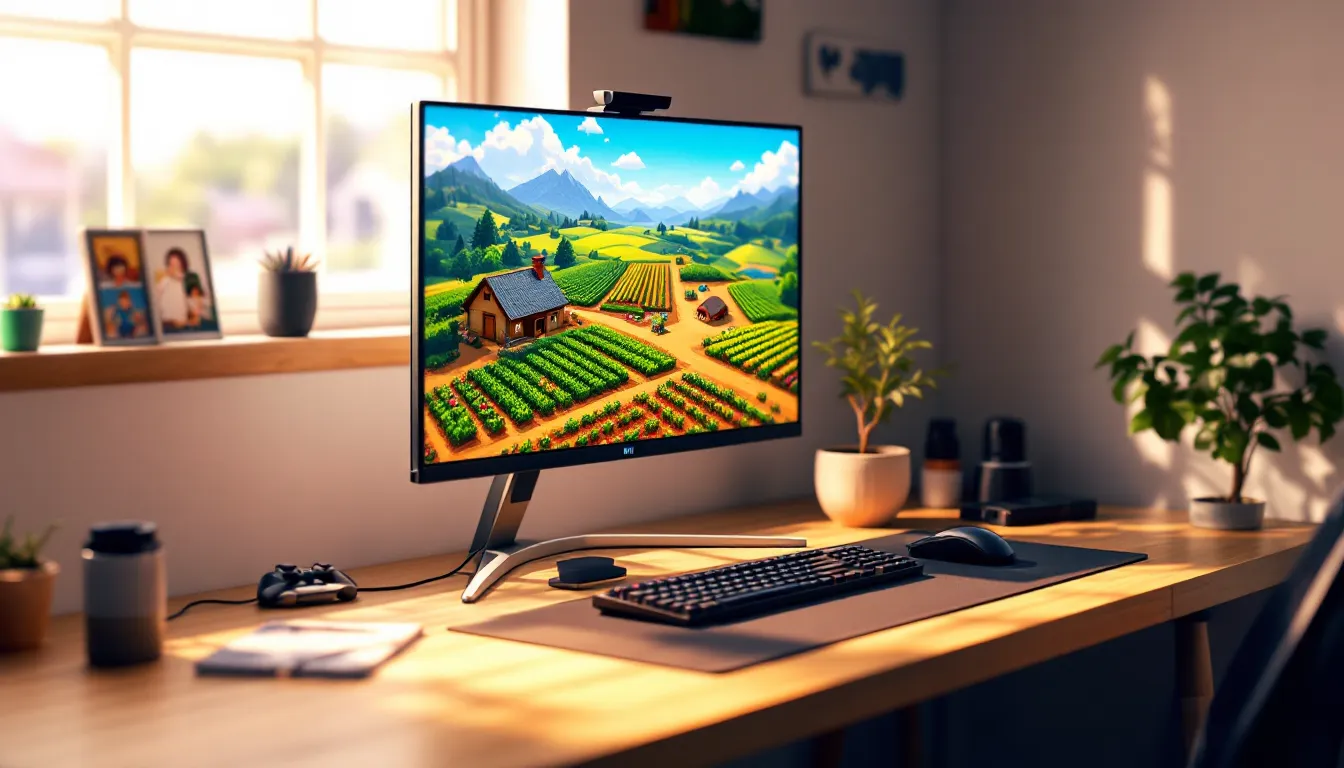

When ConcernedApe (Eric Barone) dropped Stardew Valley in February 2016, nobody could’ve predicted it would still dominate farming sim conversations a decade later. What started as a solo developer’s passion project has ballooned into one of the most beloved indie titles of all time, with over 30 million copies sold across every major platform. It’s the kind of game that sneaks up on you, one minute you’re planting a few parsnips, the next you’re optimizing crop rotations at 3 AM while mentally planning your Skull Cavern dive.
But does Stardew Valley still hold up in 2026? With constant free updates (the 1.6 update landed in 2024), expanded multiplayer, and a thriving modding scene, the game has evolved far beyond its initial release. This review digs into what makes Stardew Valley tick, from its addictive gameplay loops to its cozy atmosphere, and whether it’s still worth your time, whether you’re a returning player or someone who’s somehow missed the phenomenon.
Table of Contents
ToggleKey Takeaways
- Stardew Valley remains a gaming phenomenon after a decade with over 30 million copies sold, offering 100+ hours of content for $14.99 with continuous free updates through version 1.6 and beyond.
- The addictive “one more day” gameplay loop interweaves farming, fishing, combat, mining, and relationships so interconnected that progression in one system drives advancement across all others.
- Stardew Valley’s 1.6 update (March 2024) adds new festivals, late-game perks via the Mastery Cave, and expanded NPC dialogue, proving the farming sim continues evolving rather than coasting on nostalgia.
- Multiple platforms deliver the complete experience, with PC offering mod support, consoles providing flawless performance, and mobile versions featuring full feature parity despite control compromises.
- The cozy atmosphere, nuanced character writing, and freedom to play at your own pace make Stardew Valley ideal for comfort gaming, completionists, and players seeking rewarding progression without pressure.
- Early-game energy constraints and functional-but-basic combat are minor flaws in an otherwise masterclass in game design that prioritizes heart, craft, and player choice over cutting-edge graphics.
What Is Stardew Valley?
Stardew Valley is a farming simulation RPG where you inherit your grandfather’s overgrown farm in a small rural town called Pelican Town. You’re escaping the soul-crushing grind of a Joja Corporation cubicle to rebuild the farm, interact with townsfolk, explore dangerous mines, and basically live out a pastoral fantasy.
The game borrows heavily from Harvest Moon’s DNA but expands on nearly every system. You’ll plant and harvest crops, raise livestock, fish in rivers and oceans, mine for ore and gems, fight monsters in procedurally generated caverns, build relationships with 12 marriage candidates (plus dozens of other NPCs), participate in seasonal festivals, and work toward long-term goals like restoring the Community Center or completing Grandpa’s evaluation.
It’s available on **PC (Steam, GOG), PlayStation 4/5, Xbox One/Series X
|
S, Nintendo Switch, iOS, and Android**. Cross-platform play isn’t universal, but the core experience is consistent across all versions with minor control adjustments for mobile.
What sets Stardew apart isn’t just the breadth of activities, it’s how all these systems interconnect. Fish you catch can become fertilizer or gifts. Ore you mine crafts sprinklers that automate watering. Friendships unlock recipes and cutscenes. Everything feeds into everything else, creating a compulsive “just one more day” loop that’s claimed thousands of hours from unsuspecting players.
Gameplay Mechanics: From Farm to Fortune
Farming and Crop Management
Farming is the backbone of your operation. You’ll clear debris, till soil, plant seeds, water crops daily, and harvest when they mature. Each season (Spring, Summer, Fall, Winter) has unique crops with different growth times, sell prices, and regrowth cycles.
The early game is a constant energy management puzzle. Your stamina bar depletes with every swing of the hoe or watering can, forcing tough decisions about what to prioritize. Do you water all 40 crops manually, or save energy for a mining run? This tension eases as you unlock Quality Sprinklers (covering 8 adjacent tiles) and Iridium Sprinklers (24 tiles in a 5×5 grid), which automate watering entirely.
Crop optimization becomes surprisingly deep. Ancient Fruit and Starfruit dominate late-game profitability, but you’ll also factor in processing, turning crops into artisan goods via Kegs and Preserves Jars multiplies value. A single Ancient Fruit wine sells for 2,310g with Artisan profession, versus 550-825g raw. The math gets addictive.
Mining, Combat, and Exploration
The Mines (120 floors) and Skull Cavern (infinite desert dungeon) provide combat, resources, and a break from farm routine. Combat is simple but functional, swing your sword, time your blocks, dodge enemy patterns. You’ve got swords, daggers, and clubs, each with different speed/damage profiles.
Enemy variety keeps things interesting: bats, slimes, dust sprites, rock crabs, and serpents all require slight tactical adjustments. The real challenge is resource management, health, energy, and time (you’ll pass out at 2 AM, losing gold and items).
Mining yields copper, iron, gold, and iridium ore for tool upgrades, plus gems for gifts or selling. The deeper you go, the better the loot. Skull Cavern runs with stacks of bombs, espresso for speed buffs, and spicy eel for luck/speed are a late-game ritual. Some players hit floor 500+ in a single run, which is both impressive and slightly unhinged.
Fishing and Foraging Systems
Fishing uses a timing-based minigame where you keep a fish icon within a green bar by tapping/holding a button. Fish difficulty varies wildly, catching a Carp is trivial, but a Legendary Fish like the Glacierfish will test your reflexes.
As your fishing skill increases (1-10), the bar grows larger and you unlock better tackle and bait. Trap Bobbers slow escape speed, Cork Bobbers increase bar size. By level 10 with the right setup, even legendaries become manageable.
Foraging involves gathering wild berries, mushrooms, and seasonal items scattered around the map. It’s the most passive income source but surprisingly lucrative early on when you’re cash-starved. Spring Onions, Salmonberries (Spring 15-18), and Blackberries (Fall 8-11) provide free energy and a few thousand gold per season with zero investment.
Character Relationships and Social Dynamics
Marriage Candidates and Romance Options
Stardew Valley offers 12 marriage candidates, six bachelors, six bachelorettes, each with distinct personalities, schedules, and story arcs. You’ll raise friendship via gifts (everyone has loved, liked, neutral, disliked, and hated items), conversations, and completing personal quests.
At 8 hearts, you unlock a cutscene revealing deeper backstory. At 10 hearts, you can propose with a Mermaid’s Pendant (purchased from the Old Mariner for 5,000g during rainy beach days). Post-marriage, your spouse moves into the farmhouse, helps with chores occasionally, and provides unique dialogue.
Standout candidates include Sebastian (brooding programmer who loves sashimi and wants to escape small-town life), Abigail (adventurous gamer girl who eats quartz for some reason), Shane (struggles with depression and alcoholism in a surprisingly nuanced arc), and Leah (artist escaping a toxic ex). The 1.6 update added even more post-marriage dialogue and events, making relationships feel less static.
You can also romance all candidates simultaneously until marriage, though giving a bouquet to multiple people triggers a group confrontation cutscene that’s equal parts awkward and hilarious.
Friendship and Community Progression
Every NPC (even non-marriageable ones) has a friendship meter (0-10 hearts). Higher friendship unlocks cutscenes, mailed recipes, and occasional gifts. Linus sends you sashimi recipes, Demetrius mails you mushroom cultivation tips, Evelyn bakes you cookies.
The Community Center serves as the main story objective. It’s divided into bundles (Spring Crops, Quality Fish, Artisan Goods, etc.) requiring specific items. Completing bundles unlocks rewards like the Greenhouse (year-round crop growing), Minecarts (fast travel), and eventually restores the center, driving out the evil Joja Corporation.
Alternatively, you can side with Joja, paying gold to complete “community development projects” instead of bundles. It’s faster but morally hollow, most players go the Community Center route for the satisfaction and rewards.
Visuals, Sound Design, and Atmosphere
Pixel Art Aesthetic and Visual Charm
Stardew Valley’s 16-bit pixel art won’t blow anyone away technically, but it nails cozy charm. Seasons have distinct color palettes, Spring’s vibrant greens, Summer’s golden wheat fields, Fall’s warm oranges and reds, Winter’s stark whites and blues. The art conveys mood without needing high-fidelity graphics.
Character portraits are expressive even though limited animation. You’ll recognize NPCs instantly by silhouette and color scheme. Environmental details, fireflies at night, leaves blowing in Fall, petals drifting in Spring, add life to the world.
ConcernedApe’s art style has influenced dozens of farming sim clones, but few nail the balance between functional clarity (you always know what tiles are tillable) and aesthetic warmth the way Stardew does. It’s the difference between a spreadsheet with a skin and a world that feels lived-in.
Soundtrack and Audio Experience
The soundtrack, also composed by ConcernedApe, is legitimately excellent. Tracks like “Spring (It’s a Big World Outside)” are sunny and hopeful, while “Winter (Ancient)” feels contemplative and melancholic. Seasonal themes shift the entire game’s emotional tone, Summer’s music is lazy and warm, Fall’s is nostalgic.
Combat music in the Mines and Skull Cavern adds tension without being overbearing. Festival tracks are catchy enough that you’ll catch yourself humming the Flower Dance theme days later. The audio design is subtle, axe thunks, chicken clucks, crop harvesting pops, but it all contributes to the tactile satisfaction of farm work.
Multiple outlets, including Rock Paper Shotgun, have praised the soundtrack as one of indie gaming’s best, and it’s hard to argue. It’s the kind of OST you’ll listen to outside the game.
Content Depth and Longevity
Seasonal Events and Activities
Each season features festivals that break up the farming routine:
- Egg Festival (Spring 13): Egg hunt minigame, shop exclusive items
- Flower Dance (Spring 24): Dance partner selection (need 4 hearts with a candidate)
- Luau (Summer 11): Contribute to the communal soup (Governor’s reaction depends on item quality)
- Stardew Valley Fair (Fall 16): Minigames, grange display competition
- Spirit’s Eve (Fall 27): Haunted maze, unique decorations
- Festival of Ice (Winter 8): Fishing competition, ice sculptures
- Feast of the Winter Star (Winter 25): Secret gift exchange
Festivals provide unique items, social interactions, and minor gameplay challenges. They’re not groundbreaking, but they punctuate the year with memorable moments and give you short-term goals beyond “plant more crops.”
Seasonal activities extend beyond festivals. Spring means clearing the farm, Summer is crop optimization, Fall is preparation for Winter’s downtime, Winter is mining/fishing/relationship grinding since outdoor crops die. This rhythm prevents monotony over multiple in-game years.
Late-Game Goals and Community Center Completion
Completing the Community Center typically takes 2-3 in-game years for first-timers. After that, the game shifts to self-directed goals:
- Perfection Tracking (added in 1.5): A percentage-based checklist including maxing all friendships, catching all fish, shipping all items, completing all monster slayer goals, reaching max level in all skills, and finding all Golden Walnuts on Ginger Island
- Ginger Island: Unlocked post-Community Center, adds a tropical farm, volcano dungeon, new NPCs, and 130 Golden Walnuts to collect
- Grandpa’s Evaluation: Scored on Year 3, Spring 1, based on earnings, relationships, skill levels, and achievements, getting 4 candles (12+ points) is a badge of honor
- Aesthetic Projects: Many players spend dozens of hours decorating farms, designing efficient layouts, or creating themed areas
- Achievement Hunting: Catching all legendaries, cooking every recipe, crafting every item, completionists will sink 200+ hours easily
The 1.6 update (March 2024) added even more: new festivals, additional late-game items, expanded dialogues, and quality-of-life features like the Mastery Cave (skill-based endgame perks). Content depth isn’t an issue, the real challenge is deciding when to stop.
Multiplayer Experience and Co-Op Features
Multiplayer supports up to 4 players on the same farm, with each player getting their own cabin and personal inventory. It launched in 2018 and has been refined significantly since.
Co-op shines for couples or friend groups who want to tackle farm management together. One player can focus on crops while another handles animals and a third clears the Mines. Money is shared (optionally), but relationships, skills, and inventory are individual.
The catch? Time doesn’t pause when opening menus or inventories. This fundamentally changes pacing, no more pausing mid-combat to eat cheese. It takes adjustment but adds urgency. Coordination is key: planning Skull Cavern dives or Fishing competitions together creates memorable moments.
Connection stability has improved drastically since launch. Early multiplayer was a buggy mess: now it’s mostly smooth on PC and consoles. Mobile multiplayer is more limited (no host migration, connection issues on unstable networks).
One quirk: only the host’s farm progresses when playing. If you’re not hosting, your solo save is separate. This can be limiting for players who split time between solo and co-op sessions.
Platform Availability and Performance
PC and Console Performance
PC (Steam/GOG) is the definitive version. It runs on a toaster, literally, a potato laptop from 2010 will hit 60fps. Mod support is robust via SMAPI (Stardew Modding API), with thousands of mods adding content, quality-of-life tweaks, and visual overhauls. Load times are near-instant, controls are tight, and updates typically drop here first.
PlayStation and Xbox versions are nearly identical to PC functionally but lack mod support (officially). Performance is flawless, stable 60fps, zero load times between areas. The DualSense haptics on PS5 add subtle feedback for fishing and tool use, which is a nice touch.
Nintendo Switch is the most popular console version. Portable Stardew is dangerously addictive, “just one more day” becomes “just one more hour on the train.” Performance matches other consoles, though some players report minor frame drops during intense weather effects or when farms get cluttered with hundreds of objects. Controls adapt well to Joy-Cons, and touchscreen support in menus is handy.
Mobile Gaming Experience
iOS and Android versions are shockingly full-featured. They’re not watered-down ports, you’re getting the complete 1.6 experience (as of late 2024), including Ginger Island, multiplayer, and all content updates.
Touchscreen controls are the main compromise. Virtual joystick and tap-to-move options exist, but neither feels as precise as a controller or mouse. Combat is clunkier, fishing is slightly harder, and precise item placement can be fiddly. But, for a $4.99 mobile game (no ads, no microtransactions), it’s absurdly generous.
Performance varies by device, newer phones handle it effortlessly, but older budget devices may see slowdown on large, item-dense farms. Battery drain is moderate: you’ll get 3-4 hours on most phones.
Mobile is perfect for casual play sessions or as a secondary version for veteran players. It’s less ideal for first-timers due to control limitations, but it’s entirely playable and feature-complete.
Pros and Cons: What Works and What Doesn’t
Pros:
- Insane value: $14.99 for 100+ hours of content, free updates for a decade
- Gameplay loop is addictive: “One more day” syndrome is real
- Freedom to play your way: Focus on farming, relationships, combat, fishing, or aesthetics, all are viable
- Constant updates: ConcernedApe continues adding content (1.6 dropped in 2024, rumors of 1.7 persist)
- No microtransactions or DLC: Everything is included, nothing is paywalled
- Mod support (PC): Thousands of mods extend replayability infinitely
- Cozy atmosphere: The perfect comfort game for winding down
- Nuanced character writing: NPCs feel like people, not quest dispensers
Cons:
- Slow early game: The first Spring is a grind, limited energy, money, and tools make progress feel sluggish
- Combat is shallow: Functional but basic, don’t expect Hades-level depth
- RNG can frustrate: Fishing for specific legendaries, hunting rare drops, or waiting for specific weather can test patience
- Time pressure in multiplayer: No pause can stress casual players
- Mobile controls are compromised: Playable but inferior to other platforms
- Some late-game grind: Collecting all 130 Golden Walnuts or maxing every friendship can feel tedious
- Winter is slow: Without the Greenhouse unlocked, Winter can drag for new players
The game currently holds an 89 on Metacritic for PC, with similarly strong scores across consoles. User scores are even higher, frequently hitting 9.0+. Critical consensus mirrors the fan base: minor flaws, massive charm, incredible value. Multiple gaming outlets have featured Stardew Valley reviews that highlight its longevity and depth, with IGN praising its ability to evolve while maintaining its core appeal.
Who Should Play Stardew Valley?
Stardew Valley is perfect for:
- Farming sim fans: Obviously. If you loved Harvest Moon, Story of Seasons, or My Time at Portia, this is essential
- RPG players seeking low-stress progression: All the dopamine of leveling and loot without the pressure
- Completionists: The Perfection tracker and achievement list will consume you
- Couples and friend groups: Co-op is genuinely fun for collaborative play
- Players who love optimization: Min-maxing crop layouts, artisan good production, and Skull Cavern runs has surprising depth
- Anyone needing a comfort game: Stardew is the gaming equivalent of a warm blanket and hot cocoa
Skip if you:
- Need fast-paced action: The game is deliberately slow and methodical
- Hate routine or repetition: Daily watering, animal care, and replanting crops can feel like chores (that’s kind of the point, but not for everyone)
- Want deep combat: It’s functional, not thrilling
- Require cutting-edge graphics: Pixel art is stylish but won’t impress graphics snobs
The beauty of Stardew is its flexibility. You can play 20 minutes or 6 hours in a sitting. You can focus on one system or dabble in everything. It respects your time and playstyle, which is rare.
Conclusion
A decade later, Stardew Valley remains the gold standard for indie farming sims. ConcernedApe’s commitment to free updates, combined with rock-solid core gameplay, ensures it stays relevant even as competitors emerge. The 1.6 update proves the game isn’t coasting on nostalgia, it’s still evolving, still improving, still earning its spot in gaming conversations.
Is it perfect? No. Combat could be deeper, early energy constraints can frustrate, and some late-game tasks feel grindy. But these are minor blemishes on a game that offers hundreds of hours of cozy, rewarding gameplay for the price of a sandwich.
Whether you’re a returning player curious about 1.6’s additions or a newcomer wondering what the fuss is about, Stardew Valley delivers. It’s a masterclass in game design, a testament to what a passionate solo developer can achieve, and a reminder that sometimes the best games aren’t about cutting-edge tech, they’re about heart, craft, and giving players a world worth getting lost in. If you haven’t played it yet, fix that. If you have, maybe it’s time for another farm.