
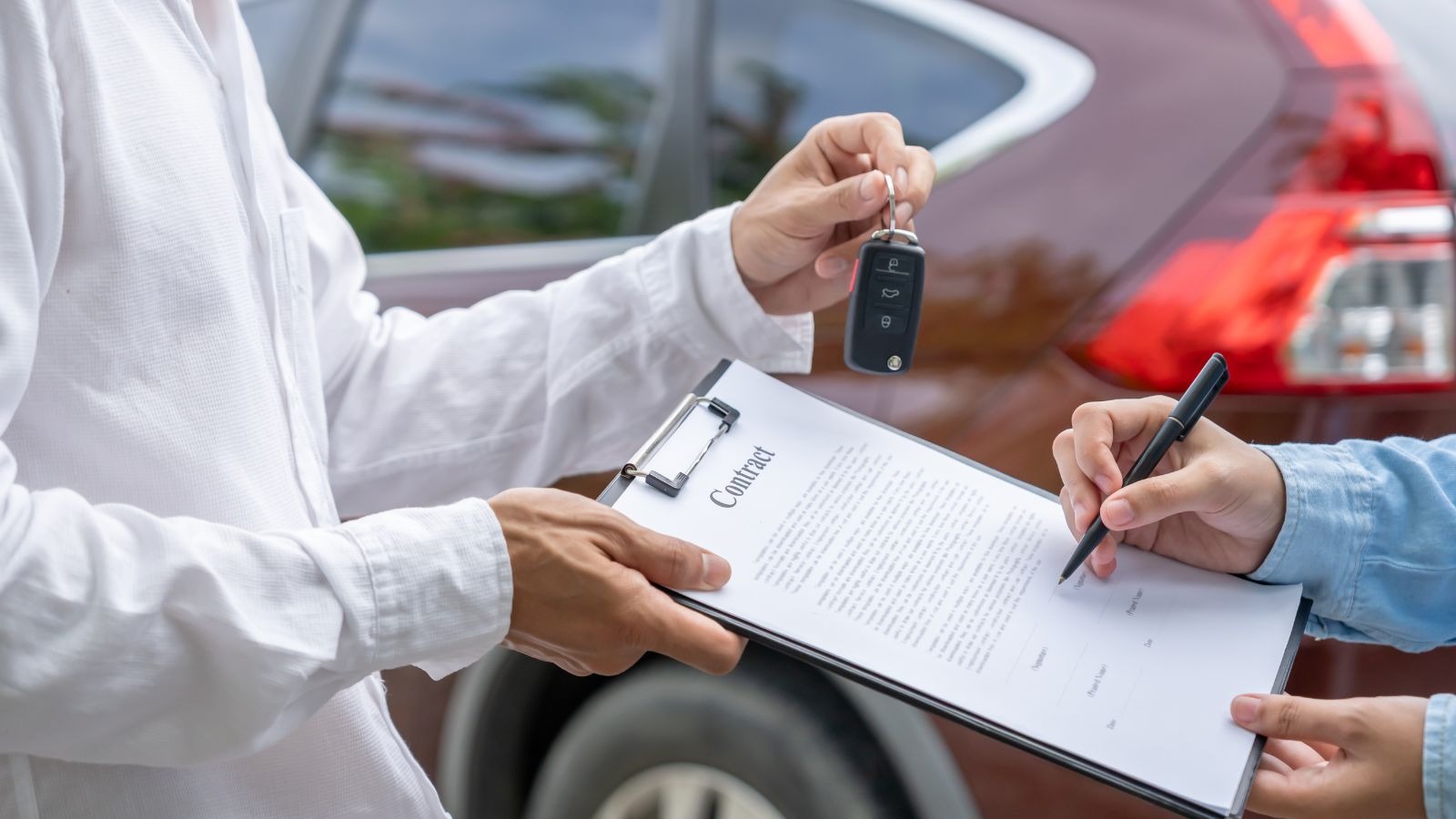

A car rental in dubai can give visitors control over how they move between business districts, beaches, shopping centres and attractions. The choice of vehicle also determines how much fuel or electricity each journey requires. By comparing powertrains, estimating daily mileage and understanding the effect of heat and traffic, travellers can select a car that delivers the right balance of performance, comfort and efficiency.
Table of Contents
ToggleThink Beyond the Daily Rental Rate
The least expensive vehicle on the booking page is not automatically the most economical option for the entire trip. Fuel or charging expenses, included mileage, parking and road tolls all contribute to the final cost.
Before choosing a vehicle, estimate:
- how many days it will be used;
- the approximate distance driven each day;
- the number of passengers;
- the amount of luggage;
- whether most journeys will be urban or intercity;
- whether reliable charging is available;
- how much time can be allocated to refuelling or charging.
A compact petrol car may work well for short urban trips. A hybrid can be attractive for frequent driving in changing traffic, while an electric vehicle may suit travellers whose hotel, workplace or regular destination provides accessible charging.
Understand the Main Powertrain Options
Dubai renters can encounter several types of vehicles, each with a different approach to energy use.
Petrol Cars
Petrol vehicles are familiar, widely available and simple to refuel. They can be a practical choice for travellers who expect to cover long distances or do not want to plan around charging points.
Efficiency varies considerably. A lightweight economy model generally requires less fuel than a large SUV or high-performance car. Engine size, vehicle weight, air-conditioning demand and driving style all influence consumption.
Hybrid Cars
A hybrid combines a combustion engine with an electric motor and battery. Depending on the system, the motor can assist the engine, move the vehicle at low speeds or recover energy during deceleration.
Hybrids can be particularly useful on urban routes involving repeated slowing and acceleration. The driver does not normally need to connect a conventional hybrid to a charger, making it a convenient middle ground for visitors interested in efficiency without changing their usual refuelling routine.
Plug-In Hybrids
A plug-in hybrid has a larger battery that can be charged externally. It may complete shorter journeys using electric power before relying more heavily on its combustion engine.
This option is most effective when the renter can charge regularly. Without charging, the vehicle carries the additional weight of its battery and may not deliver the expected efficiency advantage.
Electric Vehicles
An electric vehicle uses battery power instead of petrol. It offers quiet operation, immediate response and no tailpipe emissions during driving.
An EV can be a strong choice when:
- charging is available at the accommodation;
- daily routes are predictable;
- the vehicle can be returned with the required battery level;
- the driver understands the available charging methods;
- longer journeys are planned around suitable charging stops.
Travellers should compare the usable driving range with their actual itinerary rather than selecting an EV solely because of its advertised maximum range.
Match the Vehicle to the Route
Different Dubai itineraries place different demands on a car.
Short Urban Journeys
Visitors staying near Downtown Dubai, Business Bay or Jumeirah may mainly drive between hotels, restaurants, shopping centres and nearby attractions. A compact petrol car, hybrid or suitable EV can handle this type of schedule efficiently.
Repeated Cross-City Travel
Someone attending appointments across Dubai Marina, DIFC, Deira and Jebel Ali may cover a substantial distance each day. Comfort, fuel economy and included mileage become especially important.
A sedan or hybrid may offer a useful balance between energy consumption, cabin comfort and boot space.
Inter-Emirate Trips
Journeys to Abu Dhabi, Sharjah or Ras Al Khaimah require more planning. Renters should consider motorway comfort, remaining range and the availability of fuel or charging along the intended route.
The rental conditions should also be checked to confirm that inter-emirate travel is permitted and that the expected distance fits within the mileage allowance.
Family Travel
Families may require additional space for suitcases, pushchairs and child seats. Choosing the smallest possible car is not useful if passengers and belongings cannot fit safely.
A well-sized sedan or efficient crossover may consume less energy than an oversized SUV while still providing sufficient room.
Account for Air-Conditioning Demand
Air conditioning is an essential part of driving comfortably in Dubai. It also uses energy, whether that energy comes from petrol or a battery.
The effect can become more noticeable when:
- the vehicle has been parked in direct sunlight;
- the cabin is large;
- doors are opened frequently;
- the temperature is set unnecessarily low;
- the car is used for many short stops;
- the vehicle remains stationary with cooling running.
Efficiency should never come at the expense of passenger health or concentration. The objective is to cool the cabin sensibly, not to avoid using air conditioning.
Covered parking can reduce the amount of energy required to bring the interior to a comfortable temperature. A removable windscreen shade may also help when the vehicle is parked outdoors.
Cool the Vehicle Efficiently
A few simple habits can reduce the initial heat load:
- Open the doors briefly before entering if it is safe to do so.
- Start ventilation and air conditioning before loading vulnerable passengers.
- Use the recirculation setting once the hottest cabin air has escaped.
- Close windows after the cooling system begins working effectively.
- Use covered or underground parking when practical.
- Avoid leaving the vehicle idling longer than necessary.
Children, animals and people requiring assistance must never be left inside a parked car. Cabin temperatures can become dangerous quickly.
Learn How Heat Affects Electric Range
Electric-vehicle range is influenced by speed, temperature, air-conditioning use, passenger load and driving style. The distance shown on the dashboard is therefore an estimate rather than a guarantee.
A renter planning to use an EV should maintain a reasonable energy reserve. Arriving at a destination with almost no battery remaining creates unnecessary risk, particularly if the expected charger is occupied, unavailable or incompatible.
Before a longer journey:
- check the current battery percentage;
- review the estimated return distance;
- identify more than one charging option;
- confirm the charger’s location and access conditions;
- allow extra time;
- avoid depending on the vehicle’s theoretical maximum range.
A conservative plan provides more flexibility if traffic, heat or an unexpected detour increases consumption.
Confirm Charging Before Booking an EV
The presence of a charging symbol on a map does not guarantee that a charger will be immediately usable.
Check:
- connector compatibility;
- charging speed;
- operating hours;
- access restrictions;
- parking charges;
- required applications or accounts;
- whether the charger can be reserved;
- whether hotel charging is limited to guests;
- how long the vehicle may remain after charging.
Travellers should also ask the rental provider whether a charging cable is included and what battery level is required at return.
Understand Charging Speeds
Charging time depends on the vehicle, battery condition, charger output and current battery level.
A slower charger may be suitable when the car remains parked overnight. Faster charging can be useful during a journey, although the vehicle may not maintain its maximum charging rate throughout the entire session.
Instead of expecting one fixed charging time, travellers should plan around how long the car will naturally remain at a destination. Charging during a hotel stay, business meeting or extended shopping visit can be more convenient than making a separate stop solely for energy.
Use Regenerative Braking Smoothly
Many hybrids and EVs recover energy when the vehicle slows. This process is known as regenerative braking.
The amount of control available varies by model. Some cars provide different regeneration levels, while others manage the process automatically.
Drivers should become familiar with the vehicle in a safe setting before entering heavy traffic. Abrupt changes in speed reduce passenger comfort and can surprise other road users. Smooth anticipation remains more important than trying to maximise every moment of energy recovery.
Driving Style Has a Direct Energy Cost
Rapid acceleration, unnecessary braking and excessive speed can increase both fuel and electricity consumption.
A more efficient approach includes:
- accelerating progressively;
- maintaining a safe following distance;
- anticipating changing traffic;
- avoiding repeated lane changes;
- observing posted speed limits;
- removing unnecessary weight;
- keeping windows closed at higher speeds;
- avoiding long periods of unnecessary idling;
- using the vehicle’s efficiency display without becoming distracted.
Efficiency must always remain secondary to safety. Drivers should follow traffic conditions and official instructions rather than attempting to maintain a particular consumption figure.
Use Eco Mode Appropriately
Many modern cars include an Eco driving mode. Depending on the vehicle, it may soften accelerator response, adjust climate control or alter transmission behaviour.
Eco mode can help with relaxed urban driving, but it does not replace careful driving. Its effect will be limited if the driver accelerates aggressively, carries unnecessary weight or repeatedly crosses the city without planning.
The owner’s manual or rental provider can explain how the system behaves in the selected model. Drivers should not experiment with unfamiliar settings while moving.
Group Destinations to Reduce Wasted Energy
Route planning can make a larger difference than a small change in driving technique. Crossing Dubai several times in one day increases distance, toll exposure and time spent in traffic.
A more efficient itinerary might group:
- Downtown Dubai, DIFC and Business Bay;
- Dubai Marina, JBR and Bluewaters Island;
- Palm Jumeirah and nearby coastal districts;
- Al Fahidi, Dubai Creek and Deira;
- Dubai Parks and attractions around Jebel Ali.
Grouping locations also reduces the number of times the cabin must be cooled after the vehicle has been parked.
Avoid Carrying Unnecessary Weight
Extra weight requires additional energy to move. Most holiday luggage is unavoidable, but a rental car can gradually fill with shopping bags, water containers and unused equipment.
Return heavy purchases to the accommodation rather than carrying them for several days. Remove beach equipment once it is no longer needed, and do not choose a larger vehicle solely to store belongings throughout the trip.
Valuables, passports and electronic devices should never be left unattended in a parked car.
Check Tyres and Warning Lights
Tyre condition affects safety, handling and energy consumption. Before accepting the vehicle, inspect the tyres for visible damage and confirm that no tyre-pressure warning appears on the dashboard.
Drivers should not alter tyre pressure themselves without reliable specifications and permission. If a warning appears during the rental, contact the provider and follow the recommended procedure.
Other dashboard warnings relating to the engine, battery, temperature or braking system should also be reported promptly.
Compare Mileage Allowances Carefully
An efficient vehicle does not necessarily produce an economical rental if the driver exceeds the included mileage.
Before booking, calculate a rough total for:
- airport transfers;
- daily sightseeing;
- business appointments;
- inter-emirate journeys;
- planned shopping trips;
- the return to the rental location.
Allow a margin for route changes and unplanned activities. An offer with a higher rental rate but a suitable mileage allowance may cost less overall than a cheaper package with expensive excess-kilometre charges.
Consider the Energy Required for a Larger Vehicle
SUVs provide space, a higher seating position and strong road presence. However, larger size and weight commonly require more energy than a compact car or sedan.
An SUV is justified when its capacity will genuinely be used. It may be suitable for a large family, several passengers with luggage or an itinerary requiring additional space.
It should not be assumed that renting an SUV permits dune driving. Off-road use must be explicitly allowed by both the rental agreement and insurance conditions.
Inspect the Car Before Departure
An energy-conscious journey still begins with a standard vehicle inspection.
Record:
- bodywork and existing damage;
- wheels and tyres;
- windscreen and mirrors;
- interior condition;
- dashboard mileage;
- fuel or battery level;
- charging cable, if applicable;
- warning lights;
- air-conditioning performance.
Take clear photographs and a continuous walk-around video. Existing marks should be included in the handover record, not merely stored on the renter’s phone.
For an EV, ask the provider to demonstrate the charging port and cable release process. For a hybrid, confirm whether any special operating instructions apply.
Prepare for the Return
The return policy may require a particular fuel or battery level. These conditions should be reviewed at the beginning of the rental rather than shortly before the deadline.
Before the final journey:
- locate an appropriate fuel station or charger;
- allow time for traffic;
- check the required return level;
- remove personal belongings;
- disconnect paired phones;
- photograph the dashboard;
- record the vehicle’s final condition;
- obtain confirmation of return.
EV renters should avoid assuming that a brief charging stop will add enough energy. The actual charging rate may be lower than expected.
A Practical Energy-Smart Dubai Itinerary
Day One: Central Dubai
Begin with Downtown Dubai and continue to Business Bay or DIFC. These nearby districts can be combined without unnecessary cross-city travel. Use one parking facility for several walkable locations where practical.
Day Two: Coast and Marina
Visit Jumeirah in the morning, then continue towards Palm Jumeirah, Dubai Marina or JBR. Choose a realistic number of stops so the day does not become a sequence of parking searches.
Day Three: Heritage Dubai
Explore Al Fahidi, Dubai Creek and Deira. Park in an authorised location and cover the compact heritage areas on foot or by abra.
Day Four: A Longer Journey
Use this day for Abu Dhabi, Hatta or another approved destination. Check fuel or battery reserves, mileage conditions and the return distance before departure.
Real Efficiency Starts With the Right Choice
Energy-efficient travel in Dubai does not depend on selecting one particular type of car. It comes from matching the powertrain and vehicle size to the real itinerary.
A petrol car may offer maximum simplicity, a hybrid can reduce fuel use on varied urban routes, and an EV can be convenient when dependable charging fits naturally into the schedule. Whichever option is chosen, smooth driving, sensible air-conditioning use and well-organised routes can reduce wasted energy.
The most powerful decision is often the one made before the engine or electric motor starts: choosing a vehicle that provides exactly the space, range and performance the journey requires.